Transport in Guntur District

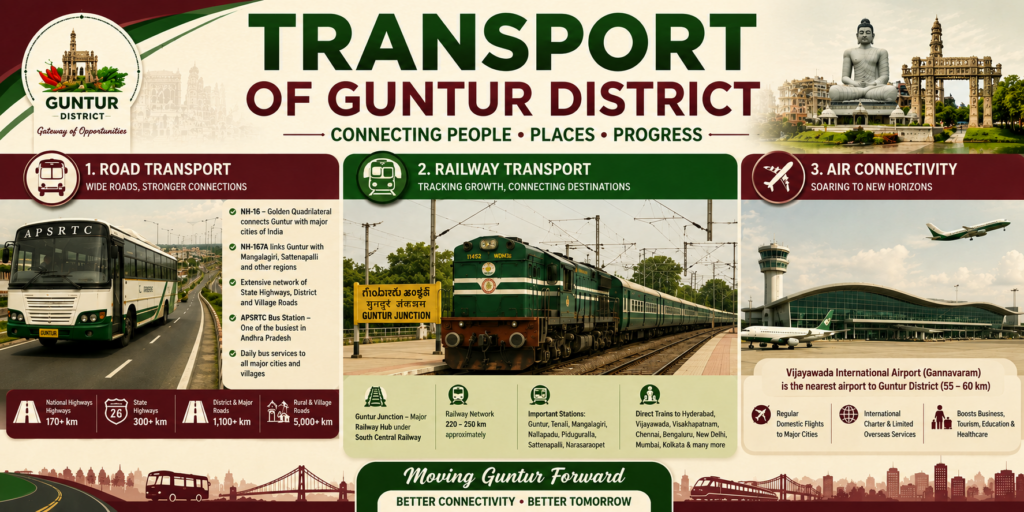
Guntur District has one of the most efficient and well-connected transportation networks in Andhra Pradesh, playing a crucial role in the district’s economic growth, agriculture, education, trade, and tourism. The district is served by an extensive network of over 6,500 km of roads, including approximately 170 km of National Highways, 300 km of State Highways, more than 1,100 km of major district roads, and over 5,000 km of rural roads, ensuring seamless connectivity between villages, towns, and major cities. National Highway 16 (NH-16), part of the Golden Quadrilateral, serves as the district’s main road corridor, while Guntur Junction, one of the busiest railway stations under the South Central Railway, connects the district to major destinations across India through a railway network of approximately 220–250 km. Although Guntur does not have its own airport, it enjoys convenient air connectivity through Vijayawada International Airport, Gannavaram, located about 55–60 km away, offering regular flights to Hyderabad, Bengaluru, Chennai, Delhi, Mumbai, Kolkata, and other cities. Together, these road, rail, and air transport facilities make Guntur District a major transportation hub, supporting the movement of people, agricultural produce, industrial goods, and business activities while driving regional development and connectivity.
Road Transport (APSRTC & National Highways)
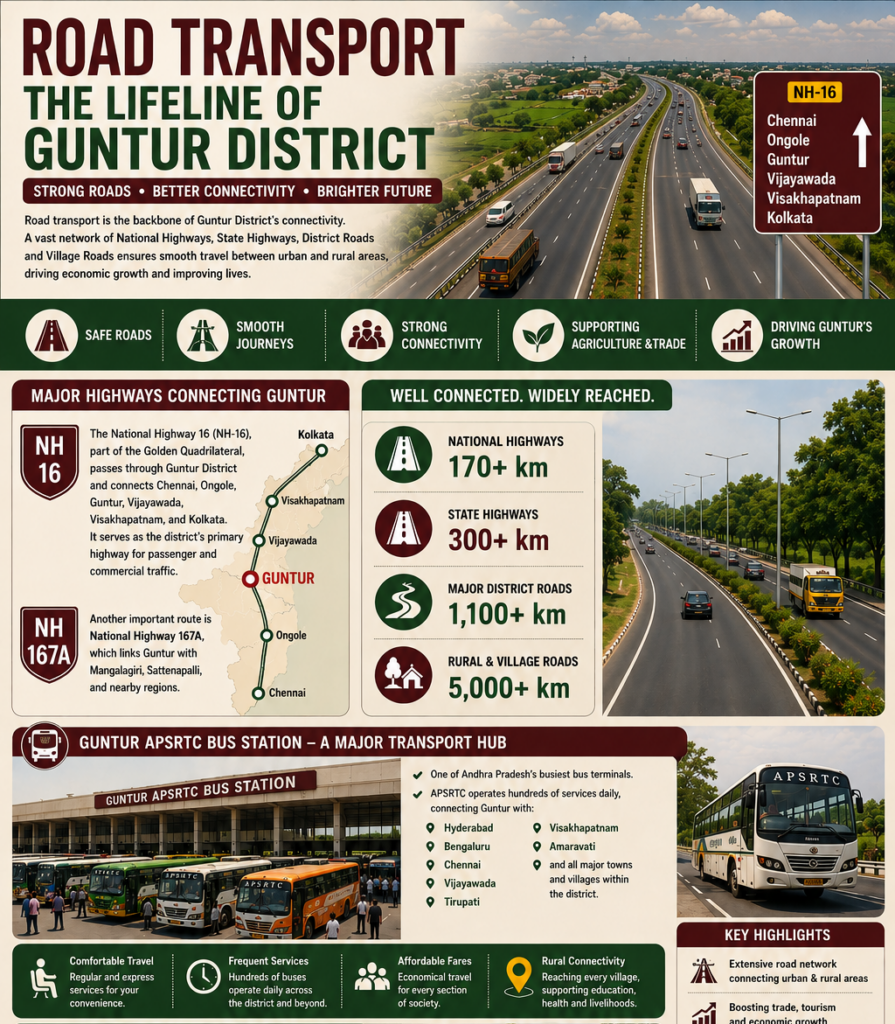
Road transport is the backbone of Guntur District’s connectivity. The district has a vast network of National Highways, State Highways, district roads, and village roads, ensuring smooth travel between urban and rural areas.
The National Highway 16 (NH-16), part of the Golden Quadrilateral, passes through Guntur District and connects Chennai, Ongole, Guntur, Vijayawada, Visakhapatnam, and Kolkata. It serves as the district’s primary highway for passenger and commercial traffic.
Another important route is National Highway 167A, which links Guntur with Mangalagiri, Sattenapalli, and nearby regions.
The district has approximately:
National Highways: 170+ km
State Highways: 300+ km
Major District Roads: 1,100+ km
Rural & Village Roads: 5,000+ km
The Guntur APSRTC Bus Station is one of Andhra Pradesh’s busiest bus terminals. APSRTC operates hundreds of services daily, connecting Guntur with Hyderabad, Bengaluru, Chennai, Vijayawada, Tirupati, Visakhapatnam, Amaravati, and all major towns and villages within the district.
Important Note on Route Numbers
Unlike many city transport systems, APSRTC inter-town and district buses generally do not display fixed public route numbers (such as 101, 202, etc.). Services are identified primarily by their origin and destination boards (e.g., Guntur–Tenali, Guntur–Narasaraopet, Guntur–Amaravati). The internal service codes used by APSRTC are operational identifiers and are not intended for passenger use
Railway Transport
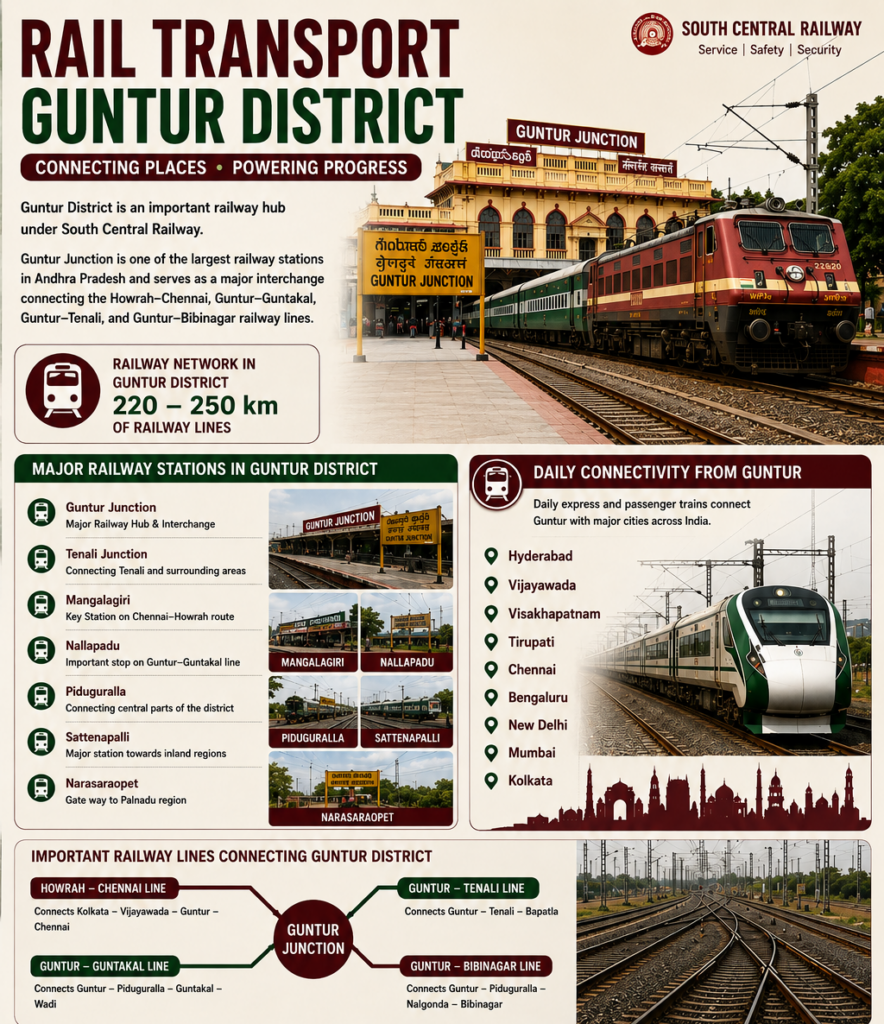
Guntur District is an important railway hub under South Central Railway.
Guntur Junction is one of the largest railway stations in Andhra Pradesh and serves as a major interchange connecting the Howrah–Chennai, Guntur–Guntakal, Guntur–Tenali, and Guntur–Bibinagar railway lines.
The district has approximately 220–250 km of railway lines, connecting important stations such as:
- Guntur Junction
- Tenali Junction
- Mangalagiri
- Nallapadu
- Piduguralla
- Sattenapalli
- Narasaraopet
Daily express and passenger trains connect Guntur with:
- Hyderabad
- Vijayawada
- Visakhapatnam
- Tirupati
- Chennai
- Bengaluru
- New Delhi
- Mumbai
- Kolkata
Rail transport also supports the movement of fertilizers, cement, food grains, and agricultural commodities, contributing significantly to the district’s economy.
Air Connectivity
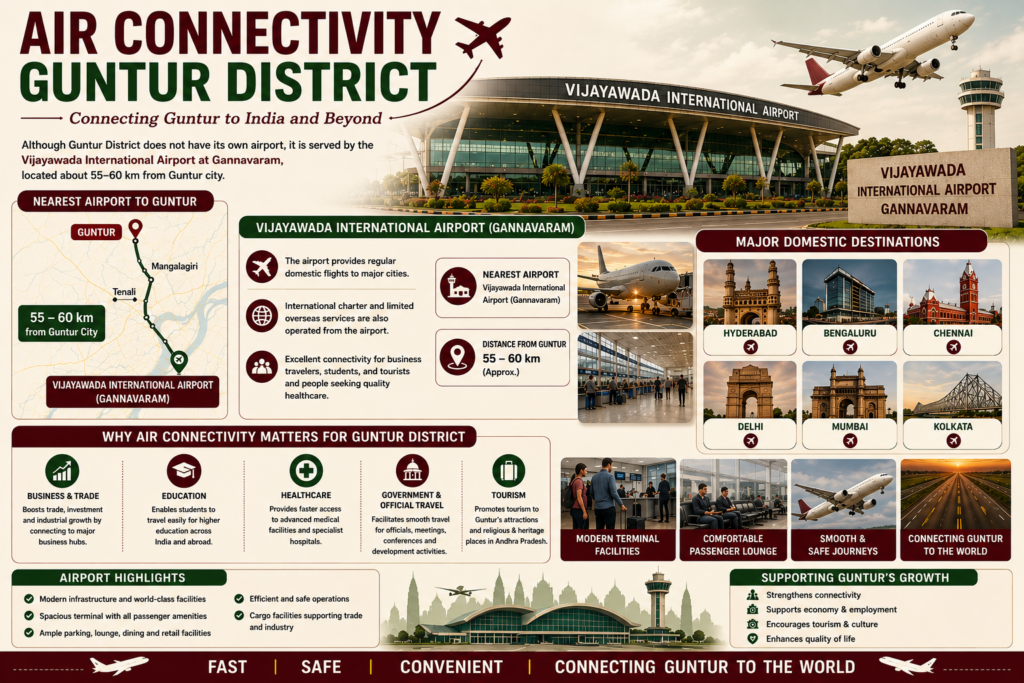
Although Guntur District does not have its own airport, it is served by the Vijayawada International Airport at Gannavaram, located about 55–60 km from Guntur city.
The airport provides regular domestic flights to major cities including:
- Hyderabad
- Bengaluru
- Chennai
- Delhi
- Mumbai
- Kolkata
International charter and limited overseas services are also operated from the airport, improving connectivity for business travelers, students, and tourists.The airport plays a significant role in supporting the district’s trade, tourism, education, and healthcare sectors.